
Ringworm in cats: how to treat it at home and how to tell it apart from flea allergy dermatitis.
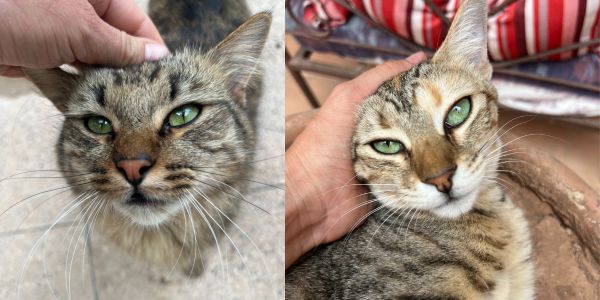
Ringworm in cats is one of the most common — and most misunderstood — skin diseases. It is frequently mistaken for flea allergy dermatitis, simple hair loss, or a mild skin irritation. This confusion often delays proper treatment, allowing the infection to spread to other animals and even to humans.
Despite its name, ringworm is not caused by a worm. It is a fungal infection of the skin and hair, medically known as dermatophytosis. It primarily affects stray cats, kittens, immunocompromised animals, and cats living in groups.
In rescue environments like Cats of Atlas, ringworm is a daily challenge. Without strict isolation, proper treatment, and environmental hygiene, a single case can quickly turn into an outbreak.
The good news is that ringworm can be treated — but only if it is correctly identified and properly managed.
This guide explains:
- what ringworm really is
- how cats become infected
- the full range of symptoms
- how to clearly distinguish ringworm from flea allergy dermatitis
- what you can safely do at home
- what must never be done
- when veterinary care is urgent
- and why support for rescue work is vital
What Is Ringworm in Cats?
Ringworm is a contagious fungal infection caused by dermatophytes. The most common species in cats are:
- Microsporum canis
- Microsporum gypseum
- Trichophyton mentagrophytes (less common)
These fungi feed on keratin, the protein found in hair, skin, and claws. This is why ringworm causes hair loss, scaling, and skin lesions.
Ringworm is not caused by poor hygiene. Even a clean, well-cared-for cat can become infected through exposure to fungal spores.
Why Ringworm Is So Common in Stray Cats and Rescues
Several factors increase the risk:
- close contact between cats
- chronic stress
- young age (kittens under 1 year)
- malnutrition
- weakened immune systems
- wounds or skin damage
- warm, humid environments
Ringworm spores are extremely resistant and can survive for months in the environment on surfaces, fabrics, cages, and floors.
How Cats Catch Ringworm
Infection occurs through:
- Direct contact with an infected animal
- Indirect contact with contaminated objects or surfaces
- Self-contamination through scratching and grooming
Some cats are asymptomatic carriers: they show no visible signs but can still spread the fungus.
Symptoms of Ringworm in Cats
Ringworm does not look the same in every cat. It can be subtle or very obvious.
1. Hair Loss (Most Common Sign)
- circular or oval patches
- sharply defined edges
- broken hairs close to the skin
- “clipped” appearance
Common locations:
- face (around eyes, ears, muzzle)
- legs and paws
- tail
- occasionally the back
2. Skin Changes
- dry scaling or thick dandruff
- crusts
- greyish or pink skin
- mild thickening of the skin
⚠️ Open wounds are uncommon, unlike severe allergies.
3. Itching (Variable)
- often mild or absent
- some cats itch moderately
- lack of itching does NOT rule out ringworm
4. Atypical Forms (Often Misdiagnosed)
- diffuse hair thinning without circular patches
- dull, unhealthy coat
- chronic dermatitis that does not heal
- claw involvement (rare)
Ringworm vs Flea Allergy Dermatitis: Key Differences
Ringworm is very often confused with flea allergy dermatitis (FAD).
However, the cause, risks, and treatment are completely different.
🔍 Comparison Table
| Criteria | Ringworm (Fungal Infection) | Flea Allergy Dermatitis |
|---|---|---|
| Cause | Dermatophyte fungus | Allergic reaction to flea saliva |
| Contagious | ✅ Yes (cats & humans) | ❌ No |
| Typical location | Face, ears, paws | Lower back, tail base |
| Shape of lesions | Circular, well-defined | Irregular |
| Hair loss | Circular, broken hairs | Diffuse, from scratching |
| Itching | Mild or absent | Severe, intense |
| Crusts | Dry | Often bloody |
| Open sores | Rare | Common |
| Progression | Slow but persistent | Rapid worsening |
| Risk to humans | Yes | None |
| Main treatment | Antifungal | Flea control + anti-inflammatory |
Signs Suggesting Ringworm
- little or no itching
- round hairless patches
- multiple cats affected
- human skin lesions appearing
- few or no fleas present
Signs Suggesting Flea Allergy
- obsessive scratching
- lesions near the tail
- bleeding scabs
- visible fleas or flea dirt
- rapid improvement after flea treatment
⚠️ Treating ringworm as a flea allergy is a serious mistake that allows the infection to spread.
What You Can Safely Do at Home
Home care does not replace veterinary care, but it is essential to control contagion.
1. Isolation (Critical)
- isolate the cat in one room
- remove carpets and fabrics
- use dedicated bowls, litter box, bedding
A non-isolated cat will contaminate the entire environment.
2. Should You Shave the Cat?
It depends.
Helpful if:
- long-haired cat
- multiple lesions
- rescue or multi-cat environment
Not recommended if:
- cat is highly stressed or aggressive
- lesions are minimal
- kitten or very weak cat
If shaving:
- use clippers, not scissors
- disinfect equipment immediately
- wear gloves
Safe Antifungal Treatments at Home
Only true antifungal products are effective.
Common veterinary options:
- enilconazole (sprays or diluted rinses)
- miconazole or ketoconazole lotions/shampoos
- antifungal + chlorhexidine combinations
Application:
- 2–3 times per week
- apply beyond visible lesions
- continue at least 4–6 weeks
⚠️ Never stop treatment early.
Antifungal Baths
Useful when:
- infection is widespread
- multiple lesions
- group housing
Rules:
- lukewarm water
- respect contact time
- dry the cat thoroughly
- keep room warm
Oral Medication
Systemic antifungals (e.g. itraconazole):
- only under veterinary prescription
- required in severe cases
❌ Never give human medication.
Environmental Disinfection (Essential)
Without cleaning, reinfection is inevitable.
Clean:
- floors
- litter boxes
- bedding
- bowls
- brushes
- carriers
Effective methods:
- diluted bleach (1:10)
- steam cleaning
- washing fabrics at 60 °C / 140 °F
Frequency: 2–3 times per week
Dangerous Mistakes to Avoid
🚫 Essential oils (toxic to cats)
🚫 Vinegar, lemon, baking soda
🚫 Human creams (especially cortisone)
🚫 Stopping treatment too early
🚫 Letting the cat roam freely
These errors prolong disease and increase risk.
Protecting Other Cats
- strict isolation
- hand washing after contact
- change clothes
- daily monitoring of all cats
- environmental treatment
In rescues, one uncontrolled case can infect dozens of cats.
Protecting Humans
Ringworm is zoonotic.
High-risk groups:
- children
- elderly
- immunocompromised individuals
Precautions:
- gloves for care
- long sleeves
- hand washing
- separate laundry
If a human develops a red circular lesion → medical consultation is necessary.
How Long Does Ringworm Really Last?
- mild cases: 4–6 weeks minimum
- widespread or group cases: 6–10 weeks or more
- kittens and weak cats: slower recovery
Visible improvement ≠ cure.
When Is a Cat No Longer Contagious?
A cat is generally:
- less contagious after 2–3 weeks of correct treatment
- considered non-contagious only after:
- complete lesion resolution
- full treatment course
- proper environmental cleaning
Ending isolation too early is the number one cause of relapse.
When to Seek Veterinary Care Urgently
Immediate consultation is required if:
- kitten or severely underweight cat
- rapid lesion spread
- infected eyes or claws
- entire body affected
- multiple cats infected
- human contamination occurs
Why Your Help Matters – Cats of Atlas
In real rescue conditions, ringworm is not a “minor skin issue”.
It is a daily sanitary emergency.
At Cats of Atlas:
- we care for stray, injured, malnourished cats
- ringworm is common due to stress and poverty
- each case requires:
- isolation space
- antifungal products
- intensive cleaning
- weeks of monitoring
👉 One infected cat consumes significant resources.
Your support helps to:
- purchase veterinary antifungals
- fund medical care
- prevent outbreaks
- protect other animals and humans
- save lives that would otherwise be lost
🐾 Every donation matters.
It allows us to treat, protect, and give a future to cats who have none.
❤️ Why Your Support for Cats of Atlas Is Vital
In the field, ringworm is not a minor skin condition.
It is a daily public health emergency.
At Cats of Atlas:
- we care for stray, injured, sick, and weakened cats
- ringworm is common due to:
- overcrowding
- malnutrition
- chronic stress
Each case requires:
- strict isolation
- costly veterinary antifungal treatments
- intensive environmental cleaning
- weeks of careful monitoring
👉 A single infected cat requires time, space, and significant resources.
Your support directly helps us to:
- purchase veterinary-grade antifungal treatments
- fund medical care and consultations
- protect other cats from contamination
- prevent abandonment or unjust euthanasia
- save invisible lives
🐾 Every donation, even a small one, makes a real difference.
It allows us to treat, isolate, heal — and give a chance to those who have none.